


DES Vocational Rehabilitation Helps Arizona Man Find Purpose through Employment After Brain Injury
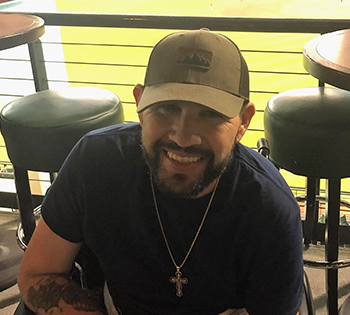
Everything can change in an instant. This is how it feels for so many people who have sustained a brain injury, including Jorge Gonzalez, an Arizona Department of Economic Security (DES) Vocational Rehabilitation (VR) client whose life changed forever after suffering two strokes.
Brain injuries can occur as a result of an external force such as a car accident or fall or internal factors including stroke, loss of oxygen, hemorrhage or even COVID-19. In either case, it’s sudden and unexpected. The trauma of a brain injury can be life-changing for the individual and their loved ones. VR and its partners provide Arizonans with brain injuries, such as Jorge, with holistic support to help them improve their overall well-being and obtain employment.
Before his strokes, Jorge worked in a high-demand career as a payroll clerk. However, the strokes left Jorge with a brain injury that impacted his neurological ability, mobility and breathing. He became a patient at the Barrow Neurological Institute where he received rehabilitation. When he felt ready to get back into the workforce, he was referred to the VR program where he met his new counselor, VR Brain Injury Specialist, Debora Gerbert.
For the past seven years, Debora has helped clients with brain injuries start their new life path through a series of therapy and supports with the ultimate goal of obtaining employment.
“Jorge was very engaged in the [VR] process and was always very open to taking suggestions from his therapists,” said Debora.
VR counselors meet with their clients regularly to ensure they’re making progress toward their goals. To reach Jorge’s goals, Debora referred him to the Center for Transitional Neuro-Rehabilitation (CTN) to provide him with extensive neuro training as well as job readiness preparation. After a lot of hard work, Jorge and his counselors felt he was ready to slowly get back into the workforce.
“Clients in this program will begin by volunteering,” explained Debora. “This gives CTN an opportunity to assess how they’re doing in the workplace.” She explained that at the beginning, representatives from CTN accompanied Jorge to work to observe and see how they could support him to be more efficient. After learning how to best support him, VR provided Jorge with cognitive therapy, transportation services and an iPad that is compatible with his cell phone to help him communicate and stay organized at work.
In July 2022, Jorge was hired to work as a receptionist for the Herberger Theater. “Being back in the workforce feels great and gives me a lot of purpose,” said Jorge. “DES helped me to be more independent. They gave me the opportunity to get better and I am really grateful for everything DES has provided to me.” Jorge is still employed and plans to attend ASU in the summer to study Social Work.
Throughout the month of March, DES recognizes Brain Injury Awareness Month and the Arizonans who live with this invisible disability. If you or someone you know has sustained a brain injury, DES may be able to help. Visit Rehabilitation Services for more information.